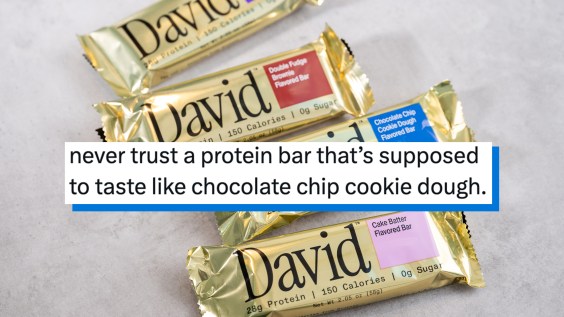
David Protein Sued: Are Your Favorite Protein Bars Hiding Calories and Fat?
In a world increasingly focused on health, fitness, and meticulous nutrition, consumers rely heavily on the accuracy of food labels to make informed choices. That trust has been shaken for fans of David Protein bars, as a recent David Protein Bar Lawsuit: Are Your Snacks Misleading? has brought serious allegations of mislabeling to light. The class-action lawsuit claims that these popular protein snacks contain significantly more calories and fat than advertised, potentially misleading countless health-conscious individuals.
The David Bar Lawsuit, filed in the Southern District Court of New York, targets Linus Technologies Inc., the company behind David Protein, accusing them of "deceptive practices in labeling and marketing." At the heart of the complaint are alarming discrepancies: an accredited laboratory, recognized by the FDA, reportedly found David Protein bars to have up to 83% more calories and a staggering 400% more fat than stated on their packaging. For consumers diligently tracking their macros or adhering to specific dietary goals, such vast differences could undermine their efforts and erode confidence in the food industry as a whole.
The Core Allegations: Discrepancies That Raise Eyebrows
The plaintiffs in the David Bar Lawsuit didn't just make claims; they backed them with independent laboratory findings. According to the court documents, tests revealed that various flavors of David Protein bars contained between 268 and 275 calories per serving, starkly contrasting the 150 calories listed on the label. Even more dramatic were the fat content findings, showing 11 to 13.5 grams per serving compared to what the plaintiffs claim was a much lower figure on the label, leading to the astonishing 400% discrepancy.
These figures are not minor rounding errors; they represent a significant deviation that could impact a consumer's daily caloric intake and macronutrient balance. For someone consuming multiple protein bars a day, these hidden calories and fats could quickly accumulate, potentially derailing weight management or fitness goals. The lawsuit argues that David Protein knowingly leveraged misleading health statistics – such as "28 grams of protein, zero sugar, and 150 calories" prominently displayed on the front of the package – to attract health-minded consumers seeking high protein with minimal calories and fat. This strategic marketing, the plaintiffs assert, constitutes "unlawful and deceptive" practices that violate FDA regulations.
The class-action status means that many individuals who purchased David Protein bars could be affected, and the plaintiffs are requesting a jury trial and seeking payment for damages from David Protein. This isn't just about a few calories; it's about the principle of transparency and the right of consumers to trust the information provided on product labels.
David Protein's Defense: A Calorie Calculation Conundrum
In response to the mounting pressure, Peter Rahal, CEO and founder of David Protein, addressed the allegations in a letter to customers and partners. His defense centers on the methodology used to calculate calories, asserting that the lawsuit's claims are "simply wrong" and stem from a "flawed and misleading interpretation of how calories are determined for certain ingredients under U.S. food labeling regulations."
Rahal points out that the laboratory testing referenced in the lawsuit relies on bomb calorimetry. This method measures the total heat released when food is completely burned, applying standard caloric values (4 calories per gram for carbohydrates, 4 for protein, and 9 for fat). While acknowledging bomb calorimetry as a recognized method for many foods, Rahal argues it's not appropriate for products containing certain ingredients like dietary fiber, specific sweeteners, and crucially for David Protein, *esterified propoxylated glycerol (EPG)*, a fat substitute.
According to Rahal, the FDA permits the use of six different calorie calculation methods and allows for specific caloric values for approved ingredients, particularly those that don't fully metabolize in the human body in the same way traditional macronutrients do. The implication is that the calories derived from ingredients like EPG should be calculated differently because they are not fully absorbed, thus yielding a lower effective calorie count than what bomb calorimetry might suggest. It's important to note, however, that Rahal's public statement did not explicitly address the significant discrepancies claimed for the fat content, focusing primarily on the calorie measurement debate.
Navigating Nutrition Labels: What Consumers Need to Know
The David Bar Lawsuit underscores a critical challenge for health-minded consumers: the complex and often nuanced world of nutrition labeling. While companies are required to provide accurate information, the methods for calculation can be subject to interpretation, especially with the proliferation of novel ingredients.
Here are some practical tips to help you navigate nutrition labels with a more critical eye:
- Read Beyond the Front-of-Package Claims: Attractive claims like "zero sugar" or "high protein" are marketing tools. Always flip the product over and scrutinize the detailed Nutrition Facts panel.
- Understand Calorie Calculation Methods: Be aware that for products containing sugar alcohols, certain fibers, or fat substitutes (like the EPG mentioned in the David Protein case), the listed calorie count may be based on specific, reduced caloric values permitted by the FDA, rather than a universal standard. This doesn't necessarily mean it's inaccurate, but it highlights the complexity.
- Check the Ingredient List: If you see unfamiliar ingredients, especially fat or sugar substitutes, it's worth a quick search to understand how they function and if they have unique caloric or digestive properties.
- Focus on Whole Foods: While convenient, processed snacks like protein bars can be tricky. Prioritizing whole, unprocessed foods like fruits, vegetables, lean proteins, and healthy fats minimizes the risk of encountering these labeling ambiguities.
- Consider Your Sensitivities: Some individuals react differently to certain ingredients, even if they have reduced caloric impact. Pay attention to how your body responds to products with novel additives.
- Do Your Homework: If a product's claims seem too good to be true, especially for very low-calorie, high-protein options, a little research into the brand or its ingredients can provide clarity.
This incident serves as a powerful reminder that while nutrition labels are designed to inform, their interpretation can sometimes be challenging, requiring consumers to be proactive and informed advocates for their own health.
Broader Implications and the Future of Food Labeling
The David Bar Lawsuit is more than just a dispute over a single product; it's a microcosm of a larger debate about transparency, consumer trust, and the evolving landscape of food science. As manufacturers continue to innovate with new ingredients and formulations to meet consumer demand for healthier, low-calorie, or high-protein options, the methods for accurately communicating their nutritional content become increasingly critical.
This lawsuit could prompt a closer look from regulatory bodies like the FDA into the guidelines for calculating and labeling calories, particularly for products incorporating novel fat or sugar substitutes. It might also encourage other food companies to review their own labeling practices to ensure they are beyond reproach, fostering greater consumer confidence across the industry. Ultimately, the outcome of this case could set a precedent for how food products, especially those aimed at the health and fitness market, are required to disclose their nutritional information, pushing for clearer, unambiguous standards that leave less room for confusion or perceived deception.
Conclusion
The David Bar Lawsuit highlights the complex interplay between food science, marketing, and regulatory compliance. While David Protein defends its labeling practices based on permissible calorie calculation methods, the plaintiffs' allegations of significantly higher calories and fat content have undeniably raised important questions about transparency and consumer trust. Regardless of the legal outcome, this case serves as a vital reminder for consumers to be diligent in scrutinizing nutrition labels and understanding the potential intricacies behind the stated numbers. In the pursuit of health and wellness, accurate information is paramount, and both manufacturers and regulators bear a responsibility to ensure that labels truly empower consumers to make the best choices for their bodies.